

[128] The Last Readers 📖
Reading is becoming harder, rarer and increasingly unnecessary. Which may be exactly why carrying a book suddenly looks so good.

This post contains affiliate links to my ShopMy - things I really liked. If you purchase from them, I might make a small commission.
TL;DR: We are entering a postliterate culture. AI can write from fragments, executives want every argument compressed and even relaxation now arrives with a screen. Reading, once an ordinary part of everyday life, is becoming a specialist practice. At the same time, books are reappearing as fashion objects, identity signals and symbols of taste. As literacy becomes less common, visible readership becomes more culturally valuable.
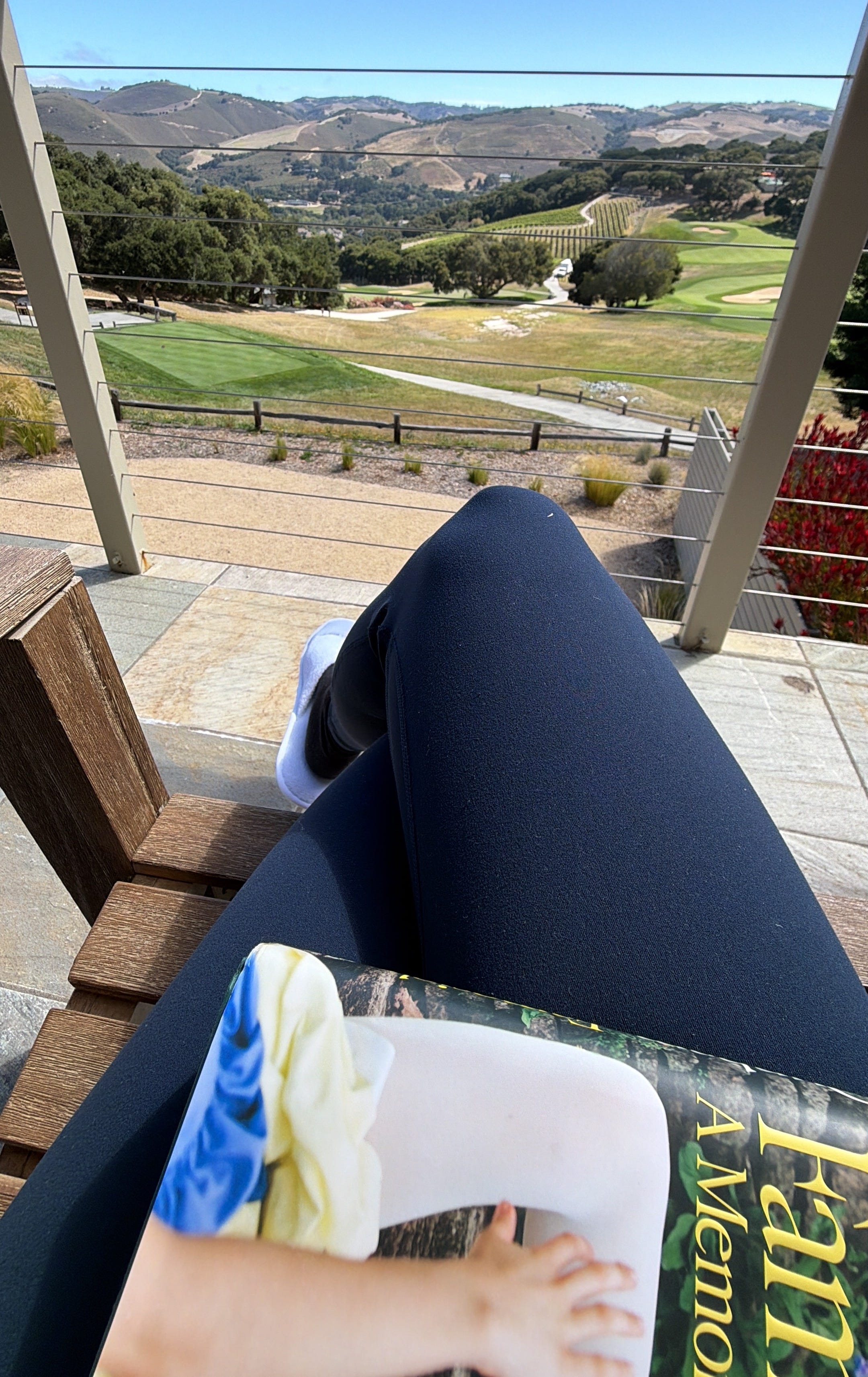
On my recent PTO road trip, I read two books.
Two books should not feel like an achievement. Yet somewhere between long drives, unfamiliar motel rooms and stretches of road without reliable reception, reading began to feel almost radical. For several hours at a time, I entered a world that had no notifications, links, tabs or suggested next steps. Nobody attempted to optimize my experience. There was no possibility of replying, sharing, generating or skipping ahead. The only task was to remain inside someone else’s sentences.
It produced a form of calm I had almost forgotten existed.
A few weeks later, I went looking for a similar feeling during an infrared-sauna session in Los Angeles. Outside the sauna was a full entertainment setup: television, Netflix and enough content to ensure that no moment of recovery would need to include the risk of boredom. Apparently, even while sitting in a heated wooden box doing absolutely nothing, I might require a plot.
The contrast felt revealing. We increasingly talk about rest, mindfulness and nervous-system regulation, while designing environments that protect us from ever being alone with our minds. Silence has become a service failure. Boredom is treated like poor customer experience. And reading, perhaps the original technology for sustained attention, is becoming one of the next big extinct things.
(For those who want to know, I read this and this, well protected, and capturing every scenery with this which was a gift from Reddit in Cannes - affiliate links)
Reading Was Never Natural
The decline of reading is often framed as a failure of discipline. People should put down their phones, rebuild their attention spans and read more books. This overlooks something important: reading has never come naturally to humans.
Spoken language emerged through evolution. Reading had to be invented, taught and repeatedly practiced. It asks the brain to convert abstract marks into sound, meaning, imagery and emotion. Mass literacy itself is a relatively recent chapter in human history.
Rose Horowitch’s recent Atlantic cover story, The End of Reading Is Here, argues that the age of widespread literacy may eventually be understood as a brief historical anomaly. Fewer than half of American adults reported reading a book of any kind in 2022. The share of Americans reading for pleasure on an average day fell from 28 percent in 2004 to 16 percent in 2023. Nearly 30 percent of American adults now struggle to paraphrase or draw inferences from a multipage text.
We are still consuming words. Probably more than ever. They arrive as messages, captions, comments, summaries, notifications, prompts and fragments. What is disappearing is the sustained act of following an idea across pages, holding several arguments in mind and allowing meaning to accumulate slowly. Horowitch calls this condition postliteracy. People can decode text, while gradually losing the patience and higher-order comprehension required to synthesize it.
Human nature may simply be reasserting itself. Given the choice between a difficult learned behavior and an infinite stream of faces, voices and emotionally legible images, the brain knows where it wants to go.
We No Longer Need to Write Properly
Generative AI accelerates the shift because it separates the quality of an input from the quality of its output.A person once had to form a reasonably complete sentence to communicate a reasonably complete thought. They needed to decide what they meant, organize it and explain it to another person.
Now a vague collection of words can become a polished email, proposal or strategic argument:
“reply nice say interested but timing bad maybe September”
The machine understands.
Bad prompting still produces surprisingly competent results. Punctuation becomes optional. Grammar becomes negotiable. Half-developed thoughts can be expanded into fully developed prose without the user completing the intellectual work between them.
Voice AI pushes this further. Tools such as Wispr Flow and the growing voice modes inside major AI platforms allow people to speak fragments throughout the day and turn them into messages, meeting notes, task lists and documents. Speech increasingly becomes the raw material; AI supplies the structure.
![[122] From Cringe to Competitive Advantage: How the Ultimate Productivity Hack Is Talking To Your Phone Like A Crazy Person 🗣️](https://substackcdn.com/image/fetch/$s_!AdgS!,w_140,h_140,c_fill,f_webp,q_auto:good,fl_progressive:steep,g_auto/https%3A%2F%2Fsubstack-post-media.s3.amazonaws.com%2Fpublic%2Fimages%2Fe89ecb04-f32e-43d7-a6de-3eb365c69c21_640x340.gif)
This is genuinely useful. It also removes many of the small daily moments in which we once had to practice writing.
Writing forces a thought to reveal its weak points. A sentence has to lead somewhere. An argument needs sequence. We could soon produce more professional-looking language while becoming less capable of creating or interrogating it ourselves.
Please Cut This Down.
The postliterate shift is already visible inside business culture.
Clients ask for shorter decks. Leadership wants the executive summary. Then the summary of the executive summary. Slides become increasingly visual, with one sentence per page and the supporting complexity hidden in an appendix nobody will open.
Any strategist has heard some variation of:
“Can we get this down to five slides?”
“Can the headline tell the whole story?”
“Can we make this more snackable?”
These requests are sometimes necessary. Many decks deserve to be shorter. Corporate language has spent decades confusing length with intelligence. Yet the constant compression of information also reveals a declining tolerance for complexity. The assumption is that every argument can be condensed without losing anything important. Nuance becomes friction. Context becomes clutter. Reading becomes work that the creator should have completed on the audience’s behalf. The ideal piece of communication now requires almost no interpretation.
AI summaries make this expectation portable. Long emails, reports, articles and meeting transcripts can be converted instantly into bullets. Instead of reading a source, we increasingly consume a machine’s explanation of it. Instead of encountering an argument, we receive its alleged conclusion.
The Atlantic describes elite students who view reading as an unnecessarily burdensome way to acquire information, as though authors were deliberately withholding the point inside hundreds of inconvenient pages.
The frustration makes sense within an efficiency culture. Why read the book when the answer can be extracted? Because the answer is rarely the whole experience. Reading trains us to live without immediate resolution. It develops the ability to notice contradiction, tone, structure and uncertainty. It requires us to remain with ideas before deciding whether they are useful. Those skills are becoming more valuable at the exact moment they are becoming less common.
The Book as an “It” Accessory
Here is where the story becomes more complicated. Reading may be declining as a mainstream behavior, but the book is rising as a cultural object.
You see it on the subway, placed carefully beside an iced coffee. On airplanes, where a paperback now communicates a different kind of traveler than an iPad does. In handbags, hotel-room photo dumps and casually composed influencer posts. In DMs asking, “What are you reading?”
The book has become an IYKYK signal. It communicates time, interiority and cultural curiosity. It suggests that the carrier can survive several minutes without checking their phone. The title functions as a personality test visible from across the room.
Summer’s hottest accessory, after setting spray, may simply be a novel. Reading is concentrating into a smaller but increasingly passionate subculture. Once a behavior becomes optional, it can become an identity marker. A person holding printed matter in public is now making a statement, intentionally or otherwise. This explains the accusations of “performative reading.” A visible book can look like cultural peacocking. But performance and genuine interest frequently coexist. Fashion has always allowed people to try on an identity before fully inhabiting it. The tote bag comes before the museum membership. The running shoes come before the marathon. The book on the table may eventually get opened.
BookTok Grew Up and Got Dressed
#BookTok has already demonstrated that reading can thrive when transformed into visual, social and emotional content. The hashtag turned shelves into backdrops, book covers into recognizable cultural assets and reading preferences into identity categories. Books became something to rank, cry over, annotate, collect and recommend. The newest phase moves beyond internet-native book culture into fashion and luxury.
Miu Miu has now hosted four editions of its Literary Club. Its 2026 Milan event, Politics of Desire, brought writers and readers together for conversations around sexuality, consent and women’s writing. The project positions literature as part of the house’s broader cultural universe rather than a temporary campaign theme.
Aesop has spent years building literature into its brand codes through essays, store libraries and book-focused activations. For its 2026 Queer Libraries, selected stores cleared their shelves of products and replaced them with books that visitors could take home for free. The gesture makes literature physical, generous and inseparable from the retail experience.
Coach made the metaphor literal. Its 2026 partnership with Penguin Random House introduced miniature, fully readable books as bag charms. Titles including Sense and Sensibility became wearable objects: part literature, part collectible, part conversation starter.
This works because a book carries more meaning than a conventional logo charm. It gives the wearer a character, an opinion and an implied inner life.
Fashion is responding to a broader rise in “literary chic”: tailoring, cardigans, pencil skirts and accessories that evoke the university library, the writer’s desk and the person who always has a book in their bag.
As machine-made content becomes abundant, evidence of human taste becomes premium.
Reading as Proof of Personhood
For years, status came from being busy, reachable and informed about everything. A different kind of status is beginning to emerge: the ability to be unavailable.
Reading a physical book indicates that a person has temporarily exited the feed. It creates a small zone the algorithm cannot enter. Nobody can see which sentence you paused on, which character annoyed you or whether your mind wandered for ten pages.
The book is private in a culture built around documentation.
What Brands Can Learn
1. Treat attention as something worth protecting
Consumers already have infinite entertainment. Brands can create value by designing spaces where stimulation is reduced rather than multiplied. A wellness experience does not necessarily need Netflix. A store does not require a screen on every surface. A dinner does not need a content capture strategy. Silence, slowness and focused participation can become features.
2. Build rituals around reading, not decorative libraries
A shelf of art books can provide atmosphere. A reading group, publishing partnership, writer residency or free-library initiative creates behavior. The most credible literary activations give people something to read, discuss, exchange or keep.
3. Use books as identity infrastructure
Books reveal taste more precisely than many products do. A title can communicate politics, humor, aspiration, nostalgia and subcultural knowledge at once. Brands can curate reading lists, commission editions, collaborate with authors or create objects that allow consumers to signal their literary identities. The curation needs specificity. “Books we love” says little. “Five novels about female ambition and the cost of reinvention” creates a point of view.
4. Resist compressing every idea into a content snack
Some audiences still want depth. In fact, depth may become more desirable as shallow content becomes automated and abundant. Brands should consider creating layered communication: a clear entry point for fast consumption, followed by richer material for people who choose to go further. The executive summary can open the door without replacing the room.
5. Make literacy feel socially alive
Reading has often been marketed as solitary, dutiful and vaguely virtuous. BookTok succeeded by making it emotional, communal and expressive. The opportunity lies in creating social formats around books: clubs, salons, swaps, annotations, author dinners and travel experiences. People may arrive for the community or aesthetic and remain for the reading.
The Final Page
Reading will probably survive. It may survive in the way vinyl survived: diminished as a default behavior, strengthened as a chosen ritual and made more culturally visible by its own obsolescence. The tragedy would be preserving only its aesthetics.
On my road trip, the two books did not make me more productive. They did not generate an output, optimize a task or improve my personal brand. They gave me several hours in which my mind belonged to one thing.
That increasingly feels like the rarest luxury of all.
Culture Codes Insider (Paid) is coming August 1st. Exclusive in depth content, once a month. Friday edition will remain included with 3 insights. Signal your interest in a special sign up subscription by pledging your support.
Hi! I’m Felicitas, a brand executive for Fortune 500 brands focusing on innovation across brands and products from a cultural insight perspective. Drawn to “what’s trending” and “the next thing” I write about cultural phenomena and forces, and how they impact brand marketing today and tomorrow. If you’re looking to understand the business of culture and trends, this newsletter is for you.