


It’s Black Friday here today - the day when people can finally get their hands on things they had an eye on all year, for the fraction of a price. No settling for dupes today - unless your dupe has become your go to, versus the OG. Which is totally fine because:
TL;DR For decades, copying was the fashion and beauty world’s worst-kept secret, a practice whispered about, denied, or dismissed as “inspiration.” But the core hypothesis of today’s culture code is this:
Duping has moved from the shadows to center stage: normalized, celebrated, and transformed into a powerful and legitimate business strategy.
What used to be considered knockoffs or guilty compromises are now openly marketed as dupes, designer-inspired, or luxe for less. Consumers flaunt them proudly. Influencers build entire channels just comparing originals to lookalikes. Platforms reward the side-by-side format. And in the middle of a global cost-of-living squeeze, “getting the look” without the price tag feels less like cheating and more like beating the system.
Let’s look at three very different “dupe-native” players:
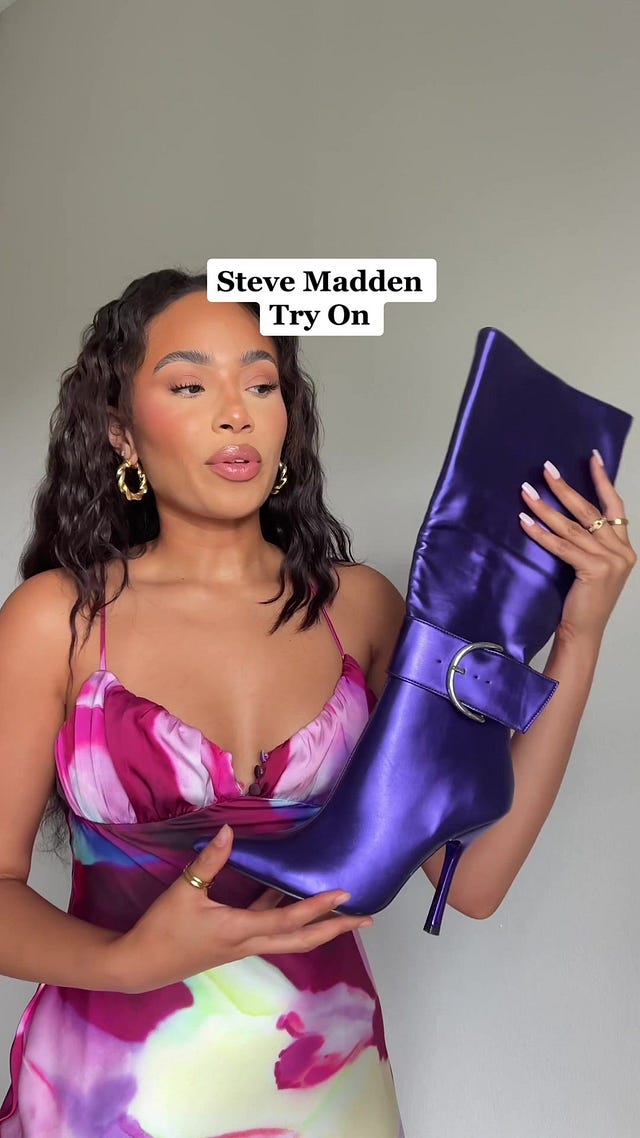
Steve Madden – footwear brand that turned “designer-inspired” into a $2B+ business.
MCoBeauty – an Australian beauty powerhouse built on copycat packaging and products.
Aldi – a discount grocer whose private-label lookalikes have become a central growth strategy.
Together they show how dupe culture has gone from slightly shameful to socially acceptable, even aspirational, in a cost-of-living crisis.
1. Steve Madden: From knockoff heels to a $2B+ dupe machine
Steve Madden launched his brand in 1990 out of a Queens factory, selling chunky platform shoes to New York boutiques. The formula was simple: watch high fashion and street style closely, then get a cheaper, trend-driven version to market fast.
Today, Steve Madden is a publicly traded company with:
~$2.28 billion in revenue in 2024, up from about $1.98 billion in 2023.
A strategy that still hinges on rapid reaction to runway and influencer trends, now across footwear, handbags, and accessories.
The brand has also spent years locked in a “legal dance” with luxury labels. Balenciaga has sued over its “Lego” heels and Motorcycle bag; Alexander McQueen, Aquazzura, Valentino, YSL, Skechers and Converse have all alleged design or trademark infringement at various points.
Despite that, the company keeps growing. Recent coverage notes Madden openly acknowledging that his shoes are often “dupes” of designer styles, and the online reaction has mostly framed that honesty as refreshing rather than shameful.
Steve Madden occupies a sweet spot: not ultra-cheap, but dramatically more accessible than the designers it references. In an era of:
Stagnant wages vs. rising prices, and
Social media feeds filled with luxury logos,
Steve Madden gives consumers what they really want: the look of a $1,200 sandal at under $200.
The brand’s longevity shows that dupe culture isn’t just a Gen Z TikTok phase; it’s been normalized over decades. What’s new is the level of transparency: calling something a “dupe” is now a selling point, not a dirty secret.
 Tiktok failed to load.
Enable 3rd party cookies or use another browser
2. MCoBeauty: The beauty dupe empire
MCoBeauty is almost a case study in building an unapologetic dupe brand from scratch.
Founded by Shelley Sullivan in Australia around 2016 as a “luxe for less” spin-out from her earlier brand ModelCo.
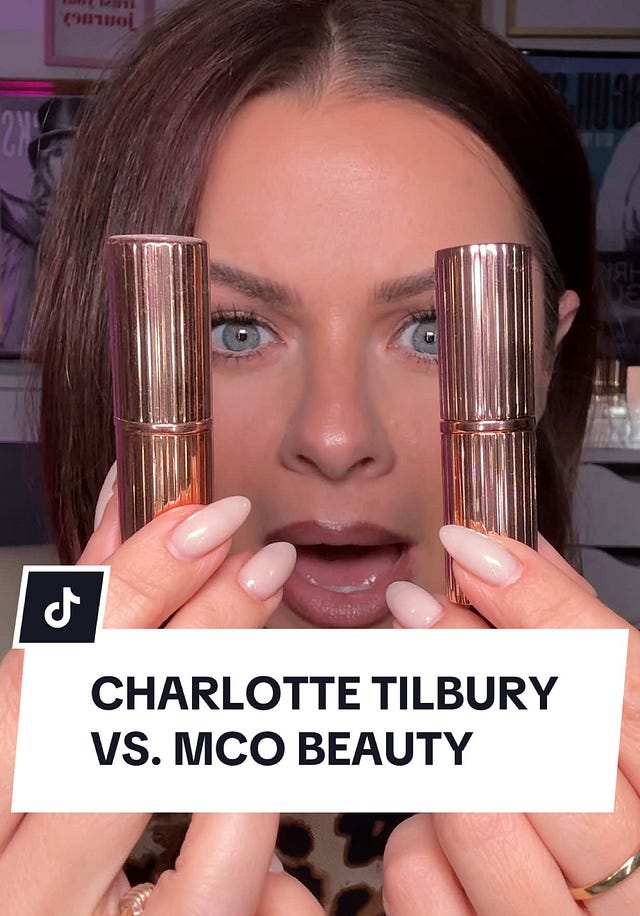
Known for products that are extremely close analogues of viral prestige items — from Charlotte Tilbury’s Flawless Filter to Drunk Elephant-style bronzing drops — often copying shade names, component shapes, and packaging cues right up to the edge of infringement.
MCoBeauty has been described as a “multi-million-dollar” cosmetics empire built on dupes of luxury brands.
In 2024 the company reportedly reached around A$250 million in annual revenue and, in early 2025, was sold at roughly a A$1 billion valuation to DBG Health (after DBG had previously bought a 50% stake).
The legal friction has been just as real as the growth: MCoBeauty has faced multiple lawsuits and trademark claims, including from brands like Charlotte Tilbury and Sol de Janeiro, accusing it of riding too close to their IP in both formula and packaging. And yet: the lawsuits have not slowed consumer demand. If anything, they’ve made the story more viral.
Why it resonates right now
Cost-of-living crisis – In markets like Australia and now the US, younger shoppers are under heavy financial pressure. Coverage of MCoBeauty’s pop-ups shows Gen Z queuing in the cold for free samples and hyped dupes, framing it as the “ultimate life hack” for staying on trend.
TikTok and “dupe hauls” – Platforms like TikTok and Instagram reward before/after swatches, side-by-side packaging comparisons, and “save vs. splurge” videos. MCoBeauty leans in, providing products that make those side-by-sides visually striking and content-worthy.
In beauty, dupes have morphed from “knock-offs” to a kind of consumer activism: a way to push back on what feels like overpricing and gatekeeping by prestige brands. That emotional framing is powerful and very hard for luxury players to counter without sounding elitist.
 Tiktok failed to load.
Enable 3rd party cookies or use another browser
3. Aldi: Dupe culture in the grocery aisle
Business growth and strategy
Aldi might not use the word “dupe” in its investor decks, but lookalike products are absolutely central to its model.
The German discounter has expanded from a small family store to one of the world’s largest grocery retailers. Recent numbers:
Global sales of around €112 billion in 2023, up 8.7% year-on-year for Aldi Nord and Aldi Süd combined.
Continued record performance and aggressive expansion plans, including hundreds of new stores in the US, UK, and elsewhere.
A big part of this success comes from private-label ranges that very closely resemble branded products in name, color scheme, and packaging architecture. Think Wheat Bisks vs. Weetabix, or its infamous Cuthbert the Caterpillar cake, clearly echoing Marks & Spencer’s Colin the Caterpillar.
Why Aldi’s dupes are booming now
In grocery, the dupe narrative is less about aspiration and more about survival:
Food inflation and household stress have pushed millions of shoppers to trade down to discounters. Aldi’s promise is “same taste, lower price” visually backed up by packaging that instantly signals what the product is “like.”
The supermarket’s private-label-first strategy means consumers are almost forced to experiment with its lookalikes and once they’re satisfied with quality, they often do not switch back to branded equivalents.
Aldi shows that dupe logic isn’t confined to fashion and beauty: it’s a retail strategy with macroeconomic teeth.
 Tiktok failed to load.
Enable 3rd party cookies or use another browser
What’s Driving Dupe-Brand Growth?
Across footwear, beauty, and grocery, the same forces fuel the rise of dupe-native brands.
1. Algorithmic Aspiration
Social feeds constantly serve luxury objects — Dior lip oils, Balenciaga heels, Charlotte Tilbury makeup — to people who can’t afford them. Algorithms don’t distinguish between fantasy and reality; they just amplify desire.
Dupes bridge that gap: “You want the look your feed pushes at you — here’s the version your budget allows.”
2. The Influencer–Dupe Feedback Loop
Creators need content that’s visual, trendy, and accessible. Dupes deliver: side-by-side comparisons make great short-form videos, and lower prices drive higher conversions. In beauty especially, dupe videos often outperform reviews of the originals because they hit both aspiration and thrift.
3. FOMO, Reframed as Frugality
With TikTok trends cycling weekly, buying full price feels irrational. Dupes let shoppers stay culturally “in the loop” while performing the identity of a savvy, value-driven consumer. Queueing for a $20 version of a $65 product is framed as smart, not cheap.
4. IP Grey Zones
Fashion and beauty are only lightly protected by IP law. As long as brands avoid logos and a few protected features, “inspired by” products remain legal. The system itself leaves plenty of room for copying — just not too literally — and dupe brands thrive in that space.
So, Does Dupe Culture Help or Hurt?
For dupe-native brands like Steve Madden, MCoBeauty, and Aldi, this cultural moment is rocket fuel. Their businesses are engineered to translate trends into accessible products at speed and scale and consumers reward that.
But for original brands, the picture is more nuanced.
Dupes chip away at surface-level differentiation. They train consumers to separate “the look” from “the logo.” They expose when a brand’s value is mostly aesthetic rather than substantive. But they also reveal something deeper:
What makes a brand truly original has nothing to do with being impossible to copy; it has to do with standing for something beyond the product.
The brands consumers stay loyal to over time are those that offer:
A compelling story and identity
A clear value-add grounded in craft, quality, or innovation
A unique problem they solve better than anyone else
An emotional or cultural role that a cheaper duplicate can’t replace
Dupes can imitate the surface, but they can’t replicate meaning, experience, or a brand’s long-earned trust. And in the long run, consumers gravitate toward brands that give them more than the aesthetic hit of a trend — they gravitate toward brands that make their lives easier, better, or more expressive.
In a world where dupes will keep getting faster, cheaper, and more socially acceptable, the real question isn’t:
How do we stop dupes? But what are we offering that no one wants to dupe; because the real thing gives them something irreplaceable?
If a brand’s only asset is how it looks, someone cheaper will copy it.
If its asset is what it means, what it solves, or how it connects, no dupe can touch it.
Thanks for reading Culture Codes! If you don’t know me yet, I’m Felicitas, a brand executive focusing on innovation across brands and products from a cultural insight perspective. Drawn to “what’s trending” and “the next thing” I write about cultural phenomena and forces, and how they impact brand marketing today and tomorrow. If you’re looking to understand the business of culture and trends, this newsletter is for you.
Good analysis. Also check out Italic, they make products in the same factories as the luxury brands but don't brand them as such.